
 n
nTechnical Mentorship: Accelerating Growth for Developers and Teams
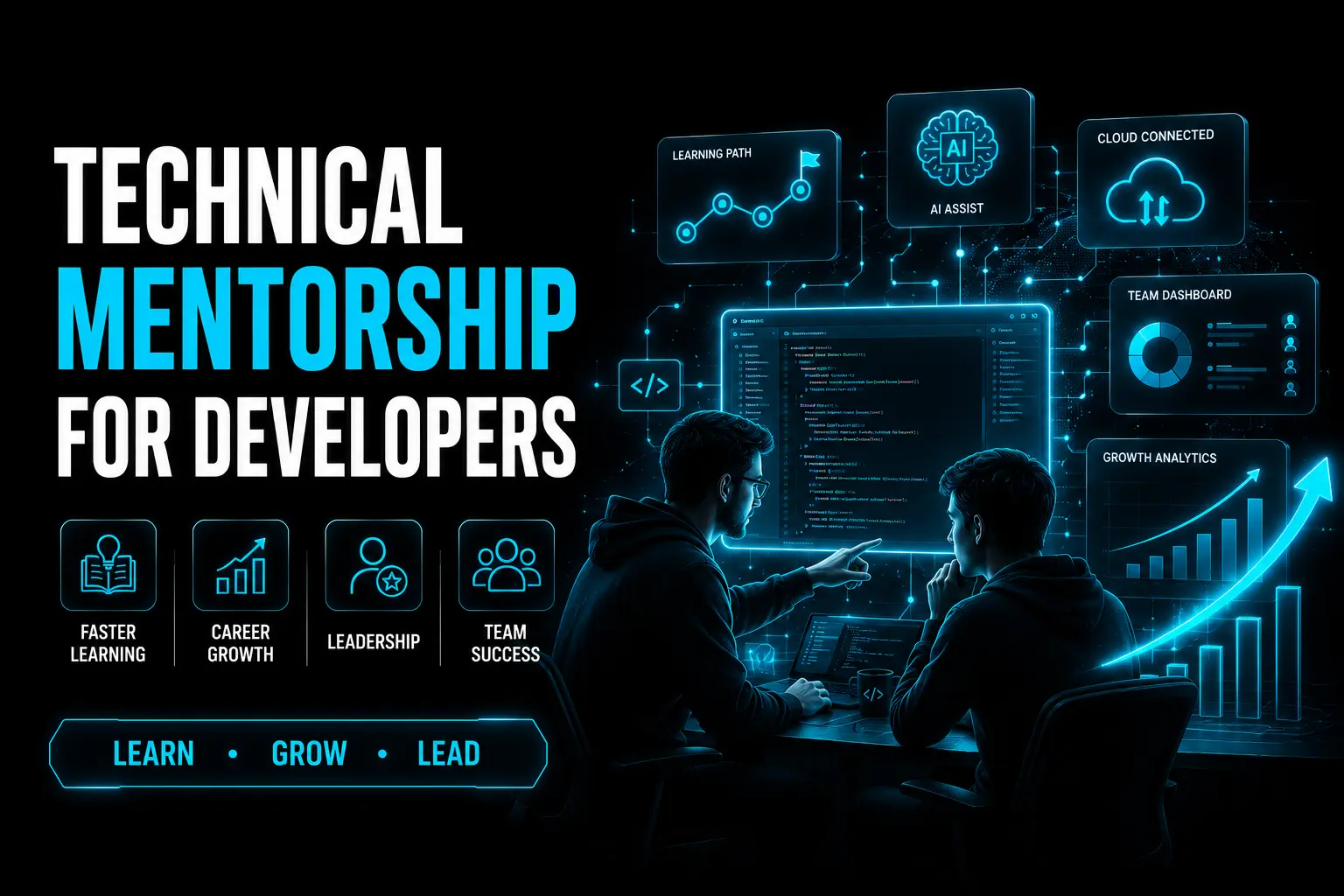
Technical mentorship accelerates developer growth through personalized guidance, faster skill development, career support, and stronger problem-solving abilities. It also builds confident leaders, strengthens teams, encourages knowledge sharing, and creates a culture of continuous learning and innovation.
Introduction
Mentoring is an important element within tech, helping younger or less experienced talent to develop and navigate the industry. Whether you're just starting your tech career or you've been in the industry for years, mentoring plays a crucial role in professional development by providing guidance, accelerating learning, and helping developers avoid common pitfalls in their careers. Technical mentorship creates a lasting impact that shapes careers, builds community, and fuels innovation across the entire tech industry.
1. Accelerated Learning and Faster Skill Development
The most obvious benefit of mentoring is accelerated learning. Having somebody guide you on what to learn and where to learn it means you'll probably learn more quickly than if you had done it alone. Mentors help navigate the technical complexities of software development while teaching you how to solve issues independently. They recommend learning resources, share practical insights, mental models, and concepts that can be difficult or time-consuming to understand without guidance. Mentorship speeds up learning by providing tailored advice on essential skills, helping mentees avoid common pitfalls and focus on the most valuable areas. Mentors enable employees to gain new skills through personalized coaching and hands-on learning, whether technical, interpersonal, or leadership skills, dramatically accelerating the learning curve.
2. Career Guidance, Confidence Building, and Expanded Networks
Mentorship extends far beyond technical skills into career development and personal growth. A mentor can introduce you to industry connections, recommend job opportunities, and help you plan a long-term career strategy. Many developers land better job positions or gain freelancing opportunities through mentor connections. With a mentor's support and feedback, mentees feel more assured in their abilities, which is especially helpful for overcoming Impostor Syndrome and navigating complex tech challenges. Mentors offer advice on career paths, whether that's choosing the right tech stack, considering a shift into management, or identifying roles that align with long-term goals. Additionally, mentors often introduce mentees to their professional networks, offering connections to new opportunities, industry experts, and potential job openings.
3. Improved Problem-Solving, Leadership Skills, and Team Strength
Learning how experienced developers approach debugging, architecture decisions, and scalability challenges helps mentees build a problem-solving mindset. A mentor's real-world experience provides perspectives you won't get from online courses or documentation, helping cut down on pain points wherever possible. Mentors provide fresh perspectives on challenges, teaching mentees to approach problems in innovative ways and think critically, which is crucial in the ever-evolving tech landscape. For mentors themselves, the experience cultivates leadership and communication skills. If you are the mentor, you need to learn to communicate insights and advice in an easy-to-understand way. Being mentored teaches what true leadership looks like, and those lessons translate into guiding junior developers, fostering collaboration, and helping them build paths toward their own goals. The cycle of mentorship creates a strong, empowered team, which is key in fast-paced projects. Many mentees eventually become mentors themselves, strengthening the tech community and creating a positive cycle of learning, growth, and connection.
Conclusion
Technical mentorship accelerates growth for both developers and teams by combining accelerated learning, career guidance, confidence building, expanded networks, and improved problem-solving skills. It's more than just sharing knowledge—it's about building meaningful connections, fostering growth, and creating a ripple effect that benefits the entire industry. Whether you're a mentee gaining confidence and new skills or a mentor contributing insights and experience, mentorship has profound impact on both sides, accelerating career development, encouraging personal growth, and cultivating a culture of support and innovation within tech. For organizations, implementing successful mentoring programs enhances skills development, improves engagement, and boosts retention, making mentorship a strategic investment in long-term success.