
 n
nHow to Turn a Startup Idea into a Scalable SaaS Product
Turn your startup idea into a scalable SaaS product with the right strategy, MVP, and technology. Validate early, build smart, and scale confidently.
Introduction
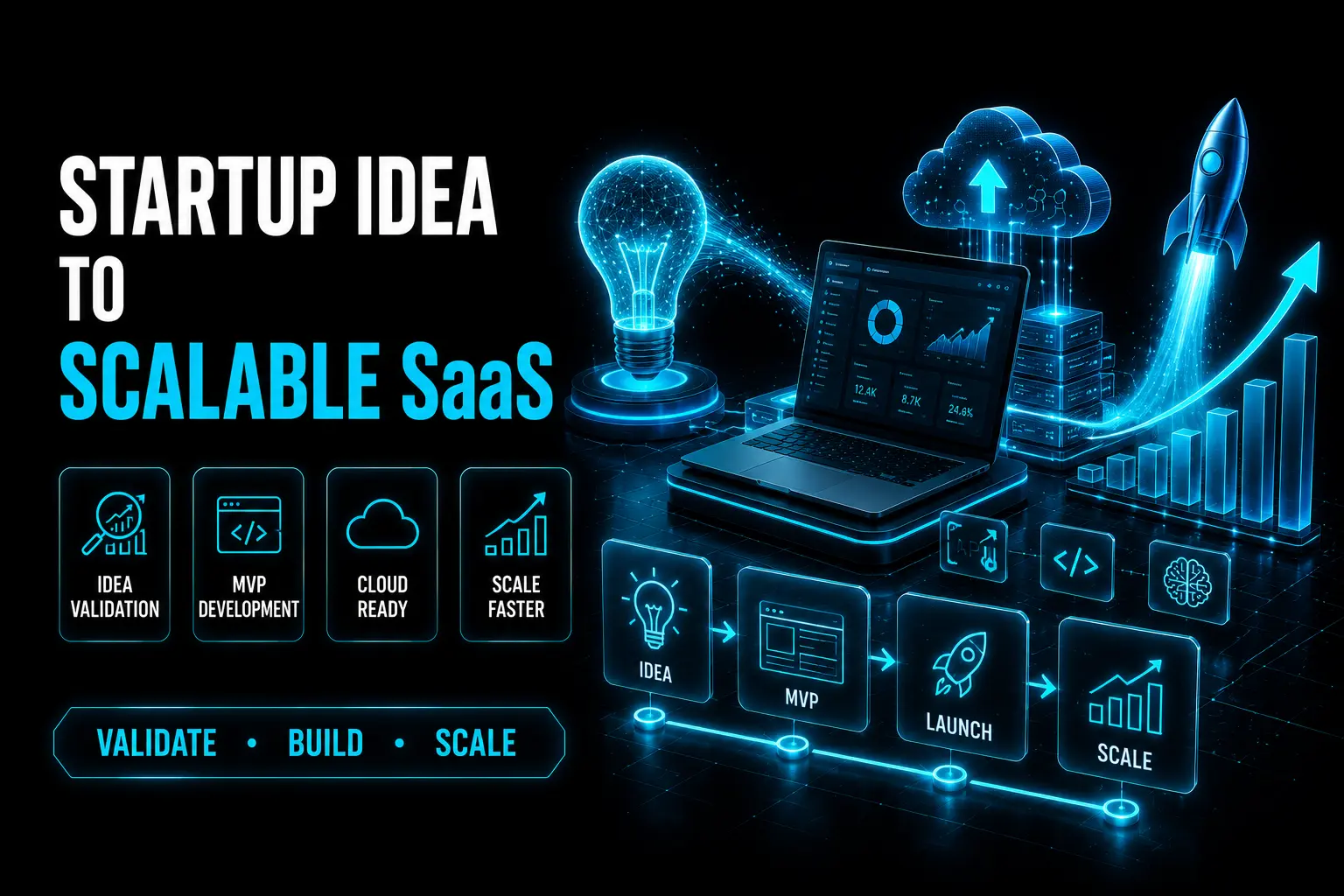
Building a scalable SaaS product requires planning, strategy, and execution to transform a startup idea into a product that not only works but thrives in the market. The goal is to help startups move from idea → MVP → market-ready product → scalable SaaS business. Success depends on validating your idea before building, choosing the right technology, prioritizing user experience, and planning for growth from day one.
1. Validate Your Idea Before You Build
The first step is ensuring that your idea solves a real problem for real users. Validation helps you avoid wasting time and resources on a product no one needs. Choose SaaS When: • You need quick deployment and fast setup. • Budget is limited initially. • Standard features meet your requirements. • You're a startup needing quick launch with minimal investment.
2. Choose the Right Tech Stack
The technology you pick will determine the scalability and performance of your SaaS product. Select technologies that are reliable, maintainable, and capable of scaling as your user base grows. Popular tech stack choices:
| Component | Recommended Options |
|---|---|
| Frontend | React, Vue.js, Angular |
| Backend | Node.js, Laravel, Django, Ruby on Rails |
| Database | PostgreSQL, MongoDB |
| Cloud Infrastructure | AWS, Google Cloud, Azure |
3. Design the Business Model and MVP
Define your SaaS business model early, including pricing strategy, subscription tiers, and revenue structure. Start with a Minimum Viable Product (MVP) to test the market quickly and gather real user feedback MVP best practices: • Focus on core features that solve the primary problem. • Launch quickly to validate assumptions. • Keep development costs low while proving value. • Use the MVP to gather analytics and track user behavior.
4. Focus on User Experience (UX)
A great product isn't just functional—it's delightful to use. SaaS products that are intuitive, fast, and visually appealing have higher user retention. UX tips for success: • Streamline the onboarding process to reduce friction for new users. • Keep interfaces simple and consistent across all features. • Collect user feedback early and often to iterate quickly. • Design for mobile responsiveness since many users access SaaS from devices.
5. Plan for Scalability from Day One
Scalability should be built into your architecture from the start to prevent costly rewrites later. Use modular, decoupled systems and microservices to handle growing traffic and complex features. Key scalability considerations: • Load balancing and caching strategies to handle traffic spikes. • Horizontal scaling for backend services as user base expands. • Efficient database design with proper indexing and query optimization. • Cloud-native architecture that automatically scales resources.
6. Launch, Measure, and Iterate
Once your MVP is ready, launch it and begin the continuous improvement cycle. Best practices for launch and iteration: • Monitor performance and uptime to ensure reliability. • Implement A/B testing for new features to validate improvements. • Implement A/B testing for new features to validate improvements. • Prioritize feature improvements based on real user feedback, not assumptions. • Maintain a product roadmap but stay flexible to pivot when needed. • Provide continuous support for product evolution as your business grows.
Conclusion
Turning a startup idea into a scalable SaaS product requires a systematic approach: validate your idea before building, choose the right tech stack, design a clear business model, build an MVP with excellent UX, plan for scalability from day one, and continuously measure and iterate based on user feedback. By following these steps—validation, tech stack selection, UX focus, scalability planning, and iterative improvement—you can create a product that not only works but thrives in the market. The journey from idea to scalable SaaS business is achievable with proper planning, strategic execution, and a commitment to continuous improvement based on real customer needs.