
 n
Customer Service Trends in 2026: Building Smarter, Faster and More Human Customer Experiences
Customer expectations are changing rapidly. People increasingly expect businesses to provide quick responses, consistent communication, personalized assistance and convenient ways to resolve their concerns. At the same time, organizations are managing growing support volumes, multiple communication channels and increasingly complex customer journeys. In 2026, customer service is becoming more than a function that handles complaints and answers questions. It is an important part of customer retention, brand reputation and business growth. Artificial intelligence, intelligent automation, connected customer data and skilled support professionals are reshaping how organizations deliver service. The challenge is not simply adopting more technology. Businesses need to identify which improvements genuinely make customer interactions easier, more useful and more reliable. Here are the key customer service trends and priorities organizations should focus on in 2026.
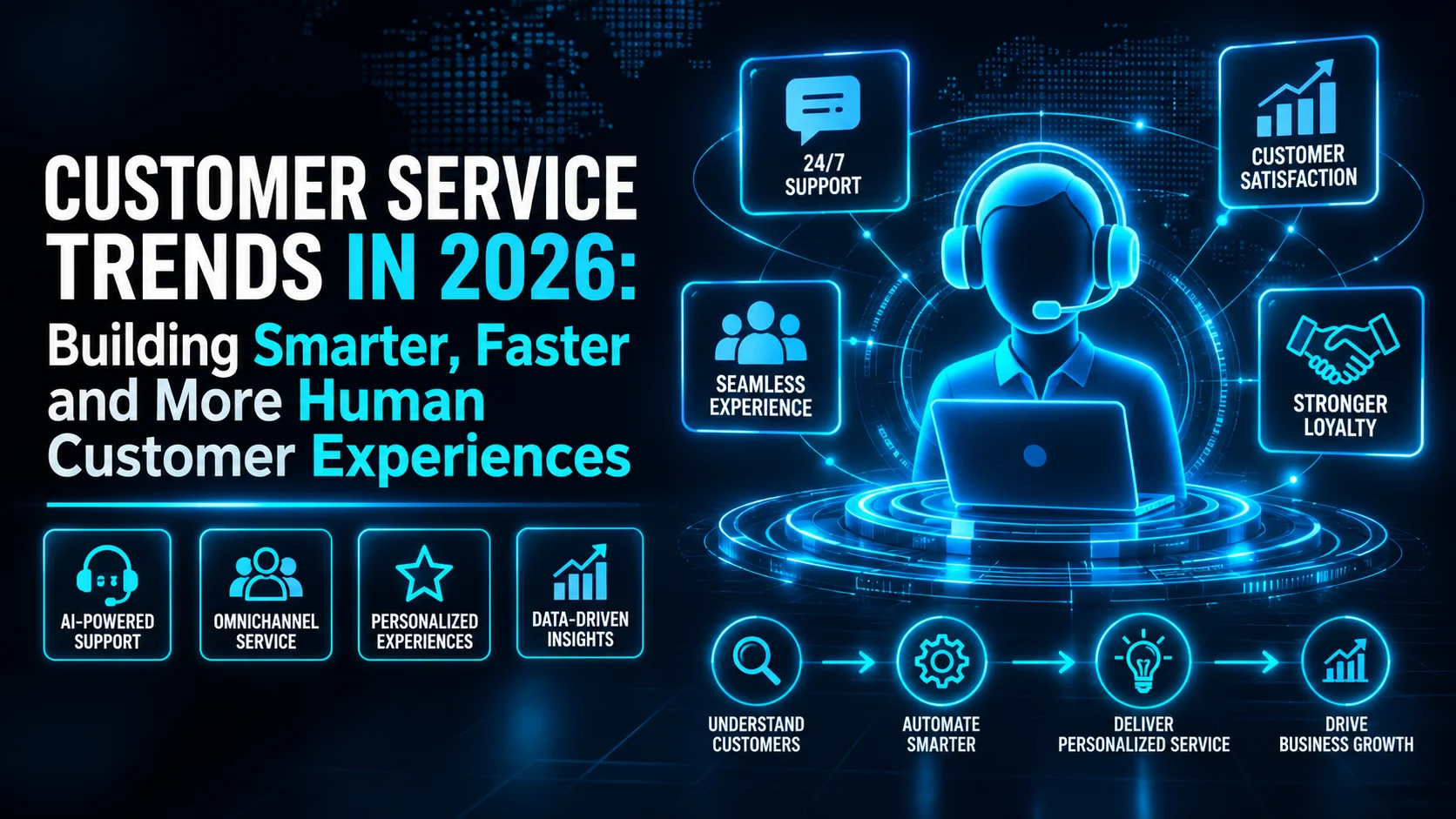
AI-Powered Customer Service Becomes More Practical
AI is becoming an important part of everyday customer support. Businesses are moving beyond basic automated replies toward systems that can understand requests, retrieve relevant information, recommend solutions and assist with multi-step service activities.
Modern AI-powered support tools can help categorize customer messages, summarize previous conversations, suggest responses and route requests to the appropriate team. More advanced agentic AI systems can coordinate certain tasks across connected business applications, subject to permissions and human oversight.
However, successful AI adoption requires more than installing a chatbot. Organizations need reliable knowledge sources, clear escalation rules, privacy controls and regular performance reviews. Customers should always have a straightforward way to reach a human representative when an issue requires judgment or empathy.
Intelligent Automation Reduces Repetitive Support Work
Automation can reduce repetitive work and help service teams manage routine requests more efficiently. Tasks such as appointment confirmations, order updates, account notifications, ticket classification and frequently asked questions can often be supported through automated workflows.
The most effective approach is to automate predictable activities while keeping people involved in sensitive, unusual or high-impact situations. This allows support professionals to spend more time understanding customer concerns instead of repeatedly completing administrative tasks.
Businesses should evaluate automation based on measurable outcomes, including resolution time, customer satisfaction, repeat contact rates and the number of issues successfully resolved without unnecessary transfers.
Omnichannel Support Creates More Consistent Experiences
Customers rarely interact with a business through just one channel. A person might discover a product on a website, ask a question through live chat, follow up by email and later contact a support representative by phone.
When these interactions are disconnected, customers are often forced to explain the same issue repeatedly. An omnichannel service approach connects conversations and relevant customer history so that teams can provide more consistent assistance.
In 2026, businesses should focus on creating a connected service experience across websites, mobile applications, messaging platforms, email and voice support. The objective is to let customers move between channels without losing important context.
Personalized Service Becomes a Competitive Advantage
Customers increasingly expect interactions to reflect their needs, preferences and previous experiences. Generic responses may resolve simple questions, but they do not always create a helpful or memorable service experience.
With appropriate data integration, businesses can use purchase history, previous support interactions, service preferences and customer feedback to provide more relevant assistance.
Personalization must be balanced with transparency and responsible data handling. Organizations should collect only information they genuinely need, protect it appropriately and provide customers with clarity about how their information is used.
Customer Experience Analytics Guides Better Decisions
Customer service teams need a clearer understanding of what customers are experiencing. Traditional reporting often focuses on the number of tickets received, average handling time and response speed. These measurements are useful, but they do not explain the complete customer experience.
Businesses are increasingly examining indicators such as first-contact resolution, customer effort, repeat complaints, sentiment patterns, satisfaction and customer retention.
Combining operational metrics with customer feedback can reveal recurring problems. For example, repeated questions about the same checkout step may indicate a website usability issue rather than a support team performance problem.
Human Expertise Remains Central to Customer Support
AI tools can assist with conversation summaries, knowledge retrieval and response recommendations, but human representatives remain essential for situations that require empathy, negotiation, creativity and complex problem-solving.
The role of a customer service professional is therefore evolving. Instead of spending most of the day answering repetitive questions, employees can focus on complex cases, relationship building and situations where personal attention makes a meaningful difference.
Organizations should invest in communication skills, product knowledge, digital tool familiarity, critical thinking and the ability to work effectively alongside AI systems.
Data Privacy and Secure Customer Interactions Gain Importance
As customer service platforms become more connected, they also handle increasingly valuable personal and business information. This makes privacy, identity protection and secure access essential parts of service design.
Organizations should review access permissions, protect sensitive customer records, monitor unusual activity and establish clear procedures for handling data securely. AI-generated responses and automated workflows should also be checked to prevent inappropriate disclosure or unauthorized actions.
Trust is built when customers can receive convenient support without feeling that their personal information is being used carelessly.
Self-Service Tools Improve Customer Convenience
Customers do not always want to wait for a support representative. For straightforward issues, self-service options can provide answers at the moment they are needed.
Well-organized help centers, searchable knowledge bases, guided troubleshooting, account portals and interactive support tools can help customers complete common tasks independently.
Self-service should not become a barrier to human assistance. Businesses need to keep information accurate, make instructions easy to understand and provide clear escalation options when customers cannot resolve an issue themselves.
Service Quality Metrics Shift Beyond Response Time
Customer service performance should be evaluated through more than response speed. A quick reply that does not solve the problem can create additional frustration and repeat contact.
Useful measurements include first-contact resolution, customer satisfaction, customer effort, average resolution time, service availability, repeat issue frequency and escalation rates.
The right combination of indicators depends on the business model and customer expectations. Reviewing these measures regularly helps organizations identify service bottlenecks and understand whether technology investments are delivering real value.
Cross-Department Collaboration Strengthens Service Delivery
Customer service is closely connected to product quality, marketing, sales, billing and operations. When support teams work independently, they may have limited visibility into the reasons behind customer complaints.
A connected service model allows teams to share relevant information and identify problems that affect multiple departments. For example, recurring delivery complaints can be reviewed with logistics teams, while repeated billing questions can highlight opportunities to improve payment communication.
Organizations should establish clear ownership, shared performance goals and practical feedback channels between departments. This makes customer service a source of business insight rather than an isolated support activity.
Practical Steps to Build a Better Customer Service Strategy
Customer service priorities in 2026 should be connected to customer outcomes and measurable business improvements. The following actions can help organizations turn emerging trends into a practical strategy.
Understand the Biggest Customer Pain Points
Begin by reviewing the most common customer questions, complaints, service delays and reasons for escalation. This helps identify where customers experience unnecessary effort and where teams spend the most time.
Prioritize problems that affect a significant number of customers or create repeated operational costs. Avoid introducing technology before understanding the issue it is expected to solve.
Adopt AI With Clear Goals and Human Oversight
Choose AI and automation opportunities based on business needs rather than technology trends. Start with well-defined tasks such as request classification, appointment scheduling or routine status updates.
Test solutions with real service scenarios, review their accuracy and measure the impact on both customers and employees before expanding their use.
Connect Customer Data and Service Channels
Review how customer information moves between websites, CRM platforms, contact centers, billing systems and other service applications.
Where appropriate, connect these systems so that authorized employees can access the context they need. Maintain suitable data permissions, security controls and information quality standards.
Develop a Workforce Ready for AI-Assisted Service
Prepare employees for changes in service workflows. Training should cover the tools they use, the appropriate handling of AI-generated suggestions, customer communication and the escalation of sensitive cases.
Invite employees to share feedback about automation and service processes. Their practical experience can help identify problems that may not be visible in management reports.
Measure Outcomes and Improve Continuously
Create a measurement framework before launching major service improvements. Establish baseline performance and define the outcomes the organization wants to improve.
Review customer feedback and operational results at regular intervals. If a new system reduces response time but increases repeat complaints, the implementation may need adjustment.
Conclusion
Customer service in 2026 is moving toward a model that combines intelligent technology, connected information and human expertise. AI and automation can make routine support more efficient, while analytics can help organizations understand customer needs and identify service improvements.
However, technology alone does not guarantee customer satisfaction. Reliable information, secure interactions, accessible human assistance and consistent communication remain essential to building trust.
Businesses that approach customer service as a long-term experience strategy can create stronger customer relationships while improving operational performance. The goal is not simply to respond faster, but to make every interaction more useful, convenient and meaningful.
Better customer service begins with understanding customer needs. By combining practical AI adoption, intelligent automation, connected communication channels, secure customer information and human expertise, businesses can build smarter, faster and more meaningful customer experiences in 2026.
Frequently Asked Questions
What are the major customer service trends in 2026?
Major trends include practical AI adoption, intelligent automation, omnichannel communication, personalized support, customer experience analytics, stronger data protection and closer collaboration between human employees and AI tools.
How is AI changing customer service?
AI can help classify requests, summarize conversations, retrieve information, recommend responses and support selected service workflows. Human representatives remain important for complex, sensitive and emotionally demanding interactions.
Why is omnichannel customer support important?
Omnichannel support helps customers move between communication channels without repeatedly explaining their situation. It gives service teams a more connected view of customer interactions and can create a more consistent experience.
How can businesses measure customer service performance?
Businesses can review first-contact resolution, customer satisfaction, customer effort, average resolution time, repeat contact rates, escalation frequency and service availability. Metrics should reflect the organization's customer experience goals.
Will AI replace human customer service employees?
AI is more likely to change how many service tasks are performed than eliminate the need for human support. Employees continue to provide judgment, empathy, relationship management and problem-solving in situations that require personal attention.
How can a business start improving its customer service in 2026?
Start by identifying common customer problems, reviewing existing service processes, selecting suitable automation opportunities, connecting relevant information sources and training employees. Measure results and improve the approach based on customer feedback.