
 n
nThe Real Cost Drivers Behind Modern Web Development Projects
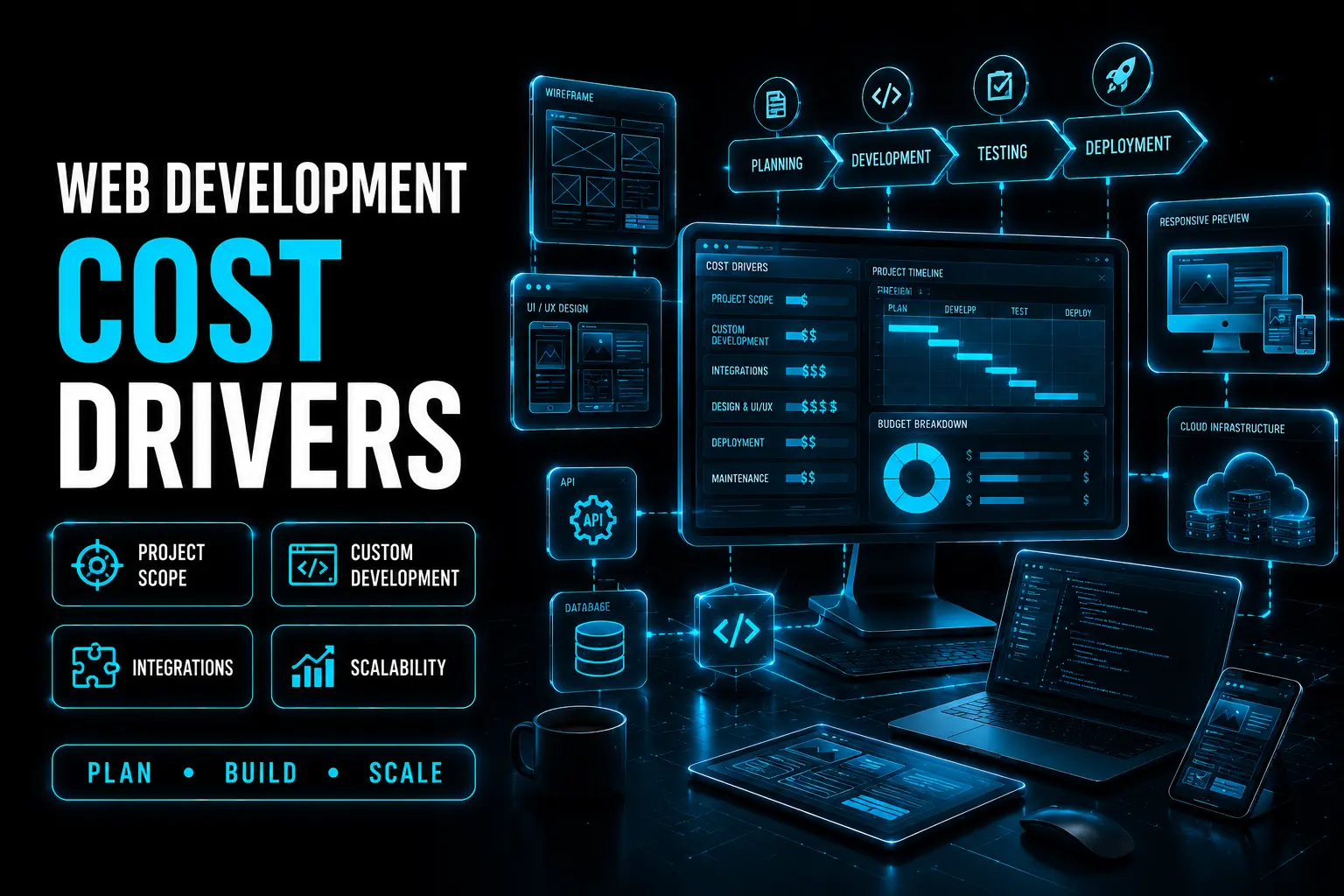
The cost of modern web development depends on much more than coding alone. Project scope, custom development, third-party integrations, UI/UX design, infrastructure, maintenance, and long-term scalability all influence the final investment. Understanding these factors helps businesses evaluate proposals more accurately and choose the right development partner.
Introduction
Ask five different vendors what a website or web application will cost, and you'll likely receive five different estimates. This variation doesn't necessarily indicate inconsistency—it reflects the fact that web development is not a standardized product. Every project involves unique technical requirements, business goals, integrations, and long-term scalability considerations.
Instead of focusing solely on price, businesses should understand the major factors that influence development costs. Evaluating scope, technology choices, integrations, design complexity, and post-launch support provides a far more accurate picture of the total investment required.
1. Scope Is the First Variable, Not the Budget
One of the biggest mistakes businesses make is requesting pricing before defining project scope. A marketing website, customer portal, and enterprise SaaS platform may all fall under web development, yet each requires vastly different levels of engineering, infrastructure, and ongoing support.
Before requesting estimates, organizations should define: • Core features required at launch • Long-term scalability goals • Future expansion plans • Essential vs. optional functionality A clearly defined scope leads to more accurate estimates and reduces unexpected project costs.
2. Custom Development vs. Platform-Based Solutions
A major cost driver is deciding whether to build on an existing platform or create a fully custom solution. CMS platforms, e-commerce frameworks, and low-code solutions generally reduce initial development costs because much of the architecture already exists.
Custom web development requires greater upfront investment but offers significantly more flexibility for businesses with complex workflows, advanced integrations, or long-term scalability requirements.
The right approach depends on business objectives, expected growth, and whether the organization is likely to outgrow a template-based solution within the next few years.
3. Third-Party Integrations Increase Project Complexity
Integrations are often one of the most underestimated parts of a web development project. Payment gateways, CRMs, ERP systems, authentication providers, analytics platforms, and external APIs all require development, testing, maintenance, and ongoing monitoring.
Common integrations include: • Payment gateways • CRM systems • ERP platforms • Authentication providers • Analytics tools • Third-party APIs Projects that appear simple during planning can become significantly more complex once multiple external systems must communicate reliably.
4. Design Quality and Content Complexity
Design requirements have a direct impact on project cost. Template-based interfaces are generally faster and more affordable, while custom UI/UX design systems require significantly more planning, prototyping, testing, and frontend development.
Additional factors affecting design costs include: • Custom UI/UX design • Motion design and animations • Accessibility compliance (WCAG) • Responsive optimization • Multilingual content • Design system development Businesses should balance branding goals with budget when determining the appropriate level of design customization.
5. Hidden Costs Beyond Initial Development
Many development proposals focus only on the build itself while excluding ongoing operational costs. Post-launch maintenance, infrastructure, security updates, content management, and technical support contribute significantly to the total cost of ownership.
Businesses should clarify whether proposals include: • Website maintenance • Hosting and infrastructure • Security updates • Performance monitoring • Content updates • Bug fixes • Support SLA Understanding these recurring costs helps prevent unexpected expenses after launch.
6. Comparing Web Development Vendors Effectively
Comparing vendors based only on price can be misleading because estimates often represent different scopes of work. A lower quote may simply exclude important functionality, integrations, or post-launch services.
Instead of focusing only on cost, evaluate vendors based on: • Scope transparency • Technical expertise • Integration capabilities • Communication process • Scalability planning • Support services • Previous project experience A detailed proposal with clearly documented assumptions often provides greater long-term value than the lowest initial estimate.
Conclusion
There is no universal answer to the question of how much a website costs because every project has unique technical, business, and operational requirements. The most accurate estimates come from clearly defining project scope, selecting the appropriate development approach, understanding integration requirements, and evaluating post-launch support. Businesses that compare proposals based on overall value rather than price alone are better positioned to build scalable, maintainable, and cost-effective web solutions that support long-term growth.