
 n
n5 Web Development Trends in 2026 You Don't Want to Miss
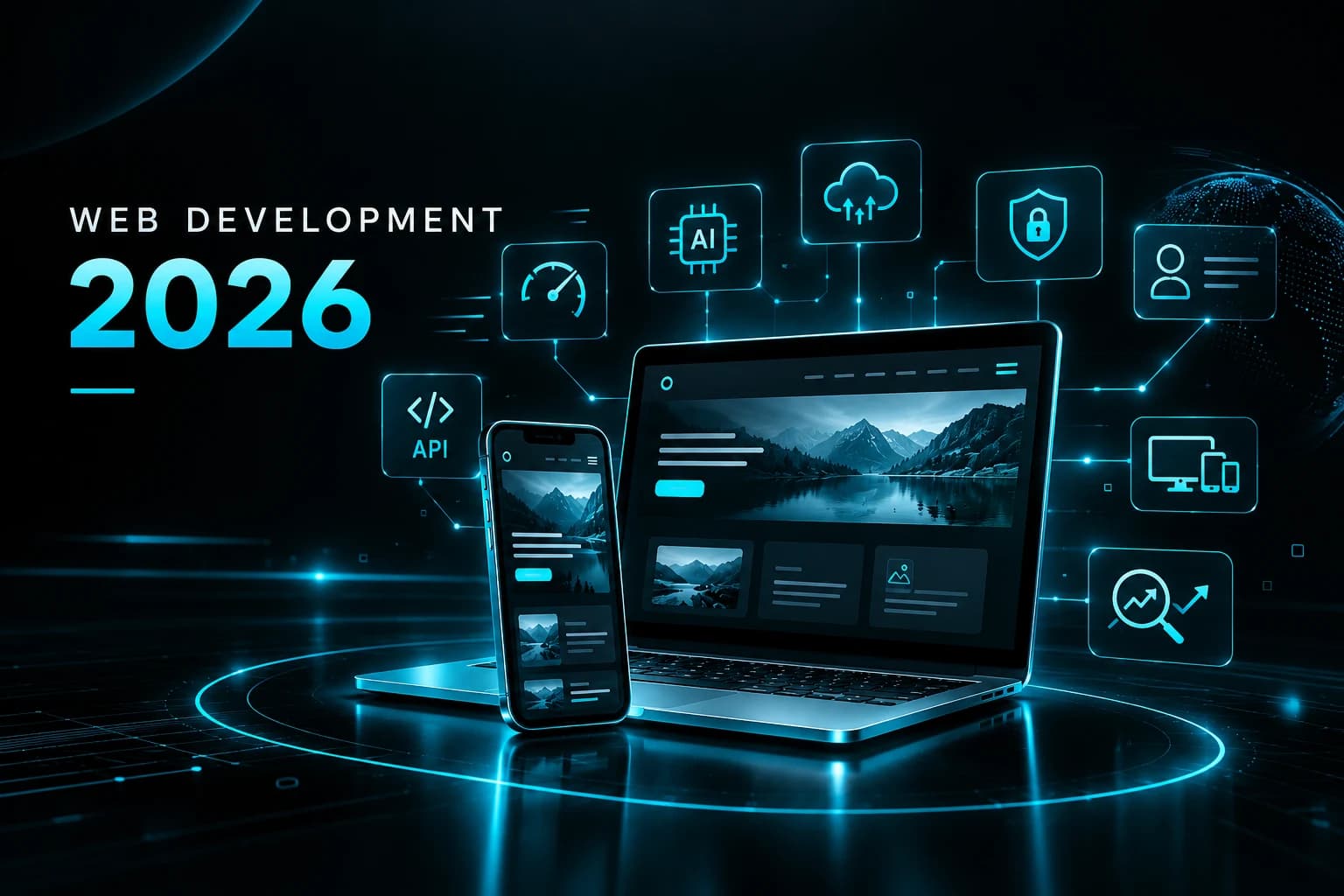
The web is changing faster than ever. In 2026, web development is not just about “having a website” – it’s about speed, trust, personalization, and real business results. If you are a business owner, startup founder, or digital marketer, understanding these trends will help you make smarter decisions, avoid wasting money, and stay ahead of competitors. Below are 5 web development trends in 2026 you don’t want to miss, explained in simple language with practical examples and clear takeaways.
1. Lightning-Fast Websites (Core Web Vitals as a Priority)
In 2026, slow websites are dead websites.
Google now gives more importance to Core Web Vitals – this means how fast your page loads, how quickly users can interact, and how stable the layout is when loading. A delay of even 2–3 seconds can make users leave your site.
What this trend means: Modern websites are built to be:
Fast on all devices – even on slow mobile internet
Lightweight – fewer heavy scripts and unnecessary plugins
Optimized for performance – compressed images, caching, and CDNs
Simple example:
Imagine two websites selling the same product:
Website A loads in 1.5 seconds
Website B loads in 5 seconds
Most users will stay on Website A and leave Website B. Over a year, this can mean thousands of lost visitors and many lost sales.
What you should do:
Ask your developer to check Core Web Vitals (PageSpeed Insights, Lighthouse)
Compress images and avoid oversized sliders and videos on the homepage
Use modern hosting (cloud, CDN) instead of cheap, overloaded servers
Bottom line: In 2026, speed is a ranking factor and a sales factor. A fast website is no longer optional.
2. AI-Powered Personalization and Smart Features
Artificial Intelligence (AI) is no longer a buzzword – it is a real part of modern websites.
Websites in 2026 use AI to:
Show personalized content based on user behavior
Recommend products or services that match user interest
Provide smart chatbots that answer questions in real time
Analyze user actions and suggest improvements
What this trend means:
Instead of every visitor seeing the same static website, AI can:
Show different banners to first-time and returning visitors
Suggest relevant blog posts, services, or products
Capture leads more effectively with smarter forms and chat
Simple example:
A coaching website:
Without AI: Same homepage, same offer for all visitors
With AI:
New visitors see “Free 15-minute consultation”
Returning visitors see “Book your first paid session now”
Visitors who read a blog on “marketing” see marketing-related offers
What you should do:
Add an AI chatbot to answer basic questions and collect leads
Use tools that personalize recommendations (blogs, products, services)
Track user behavior and adjust your content strategy
Bottom line: AI helps your website feel more human and more relevant – and that leads to better conversions.
3. Headless and API-First Development (For Flexibility and Scale)
As businesses grow, they need websites that can connect with many platforms – apps, CRMs, payment gateways, marketing tools, and more.
This is where headless and API-first development comes in.
What this trend means:
In simple words:
Traditional website: Frontend (what you see) and backend (data, logic) are tightly connected
Headless website: Frontend and backend are separated, and they talk using APIs
This makes it easier to:
Use the same backend to power website, mobile app, and kiosk screens
Change design in the future without rebuilding everything
Integrate with tools like CRM, marketing automation, and custom dashboards
Simple example:
A growing e-commerce business:
Today, they only have a website
Next year, they want a mobile app
Later, they want to show products on smart TVs or in-store screens
With a headless approach, they don’t start from zero each time. The same backend and product data can feed all these platforms.
What you should do:
If you are a small local business, a normal website may be enough
If you plan to scale, consider a developer who understands API-first or headless architecture
Always ask: “How easy will it be to add new platforms in the future?”
Bottom line: Headless and API-first development gives you future-proof flexibility as your business grows.
4. Security, Privacy, and Trust as Non-Negotiable
Users today are more aware of data privacy, scams, and fake websites.
In 2026, a website that does not look or feel safe will quickly lose trust.
What this trend means: Modern websites must:
Use HTTPS (SSL certificates) – no “Not Secure” warning
Follow basic data protection rules – forms, payments, user accounts
Keep software, plugins, and themes updated
Protect against hacks, spam, and malware
Trust is also visual:
Clear contact details and business address
Real photos, team details, testimonials
Clear terms, privacy policy, and refund/return policy (for e-commerce)
Simple example:
Two online stores:
Store A: Has HTTPS, clean design, clear policies, trust badges, contact number
Store B: No SSL, no contact details, unclear pricing
Even if Store B is cheaper, most customers will buy from Store A.
What you should do:
Make sure your site uses SSL (https://)
Update your CMS and plugins regularly
Use strong passwords and security tools
Add trust elements – reviews, testimonials, certifications, case studies
Bottom line: Security and trust are part of EEAT (Experience, Expertise, Authoritativeness, Trustworthiness) – and they directly affect both Google rankings and sales.
5. Content + UX: Websites Built for Humans, Not Just for Google
In 2026, the most successful websites combine two things:
Strong content – clear, helpful, experience-based
Great user experience (UX) – simple, logical, and easy to use
Google now rewards websites that truly help people, not just “stuffed with keywords”.
What this trend means:
Good web development is not only about code. It also focuses on:
Clear layout and navigation
Simple language that every visitor can understand
Helpful blog posts, FAQs, case studies, and guides
Clean, distraction-free pages with clear calls to action
Real examples, metrics, and stories that show real-world experience
Simple example:
A web design agency with two types of service pages:
Page A: Only technical details and buzzwords like “cutting-edge, robust, scalable”
Page B: Explains:
Which businesses this service is for
What problems it solves
Real examples and results
Clear pricing ranges
Simple next steps
Page B will always perform better for users and for Google.
What you should do:
Write content from the user’s point of view – their problems, not your features
Share experience – what you learned from real projects
Use headings, short paragraphs, and bullet points for easy reading
Make sure your pages answer real questions people search for
Bottom line: In 2026, Google loves websites that users love. Helpful content and good UX are your best long-term ranking strategy.
How to Use These Trends for Your Own Business
You don’t need to change everything at once. Start with simple, practical steps:
Check your website speed and fix slow pages
Add at least one smart feature – chatbot, recommendations, or simple personalization
Review your website security and trust signals
Improve one key page (Home, Services, or Pricing) to be clearer and more helpful
Talk to your developer or agency about future plans – do you need a more flexible, scalable setup?
If you are working with clients as an agency or freelancer, these trends can also help you:
Explain why quality development costs more but gives better results
Sell ongoing maintenance and optimization (not just one-time projects)
Position yourself as a strategic partner, not just a coder
Final Thoughts: Web Development in 2026 Is About Growth, Not Just Code
“Web development” is no longer only about making pages look good.
In 2026, it is about:
Speed
Personalization
Flexibility
Security
Real value for users
If your website supports these five trends, it will not only look modern – it will help your business grow, build trust, and convert more visitors into customers.