
 n
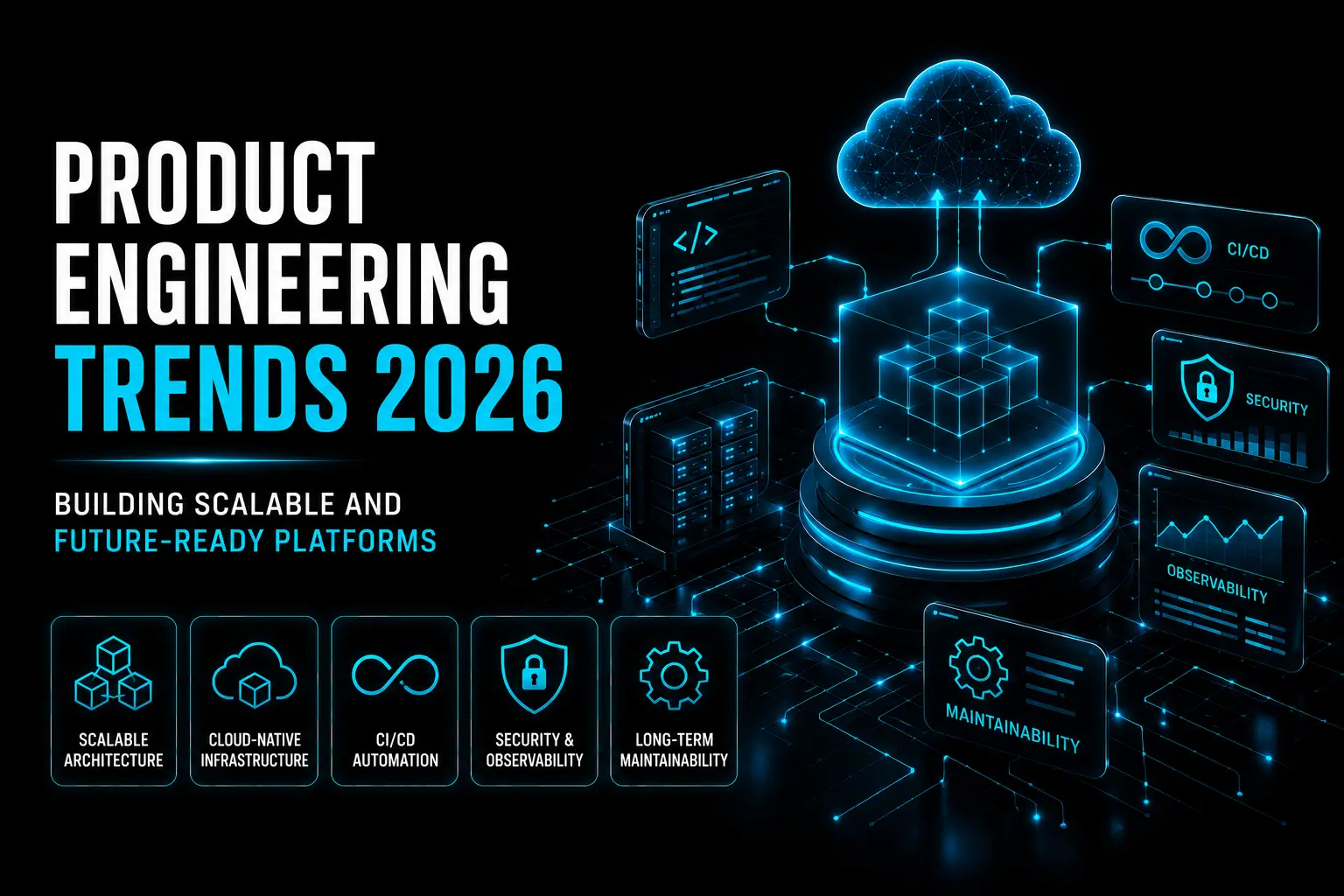
nProduct Engineering Trends 2026: Building Scalable and Future-Ready Platforms
The next era of product engineering will be defined by 10 shifts reshaping industry leadership. In 2026 and beyond, product engineering is becoming more AI-native, hardware-software converged, and closely tied to resilience, energy, regulation, and sovereignty.
Introduction
Product engineering is evolving rapidly as AI, cloud computing, automation, and digital transformation reshape modern software and hardware development. In 2026, businesses are investing in scalable product engineering solutions that combine AI-native development, cloud technologies, cybersecurity, and intelligent automation to build secure, future-ready, and high-performance digital products. Organizations that adopt end-to-end product engineering strategies can accelerate innovation, improve operational efficiency, and gain a long-term competitive advantage.
Custom Silicon Is Becoming a Product Strategy
One of the biggest shifts in product engineering is the move from generic compute to differentiated silicon. Custom silicon, board design, verification, and post-silicon validation are becoming key product differentiation levers for OEMs, hyperscalers, and industrial companies.
AI Is Moving From Co-Pilot to Engineering Operating System
AI is no longer limited to code assistance. It is now embedded into design, simulation, software, testing, manufacturing, and lifecycle support, improving first-time-right design and reducing engineering effort.
The Bid Is Becoming AI-Aware
Customers increasingly expect AI-driven productivity improvements to be reflected in engineering and commercial models. This shift is accelerating the adoption of outcome-based product engineering, where success is measured by business value, reusable intellectual property, innovation, and faster product delivery instead of engineering effort alone.
AI-Ready Data Centers Are Becoming a New Engineering Category
AI growth is turning data centers into a major product engineering segment. High power density, cooling complexity, and validation requirements are creating demand for multidisciplinary engineering across thermal design, control systems, and digital twins.
Electrification Is Turning Products Into Thermal and Software Systems
Electrification is transforming automotive, aerospace, industrial, and mobility platforms. Modern product engineering now focuses on thermal management, battery management systems, power electronics, EV charging infrastructure, embedded software, and lifecycle safety to develop reliable, energy-efficient, and intelligent products.
Factories Are Becoming Engineered Products
Manufacturing engineering is expanding into a more strategic role. Product design, process simulation, plant engineering, and commissioning are now part of a connected engineering value chain.
Validation Is Shifting Left and Becoming More Intelligent
Validation is shifting earlier in the product development lifecycle as products become more software-defined and electrified. Organizations are adopting AI-assisted testing, HIL/SIL validation, compliance engineering, and automated quality assurance to improve product reliability, accelerate releases, and meet global regulatory standards.
Cost Engineering Is Becoming Resilience Engineering
Organizations are no longer focused only on reducing cost. They are now balancing resilience, sustainability, speed, and risk, making cost engineering a key part of long-term product strategy.
GCCs Are Becoming Product Engineering Control Towers
Global capability centers are evolving from delivery bases into engineering ownership hubs. They now support product development, AI/ML, cybersecurity, hardware engineering, and Build-Operate-Transfer models.
Defense and Aerospace Are Entering a Sovereign Engineering Supercycle
Defense and aerospace are emerging as major growth areas for product engineering. Demand is rising for embedded systems, avionics, ruggedized validation, manufacturing support, and next-generation platform development.
Conclusion
Product engineering in 2026 is driven by AI, custom silicon, electrification, cloud-native technologies, and resilient engineering practices. Businesses that integrate hardware, software, manufacturing, validation, cybersecurity, and AI into a unified engineering ecosystem will build scalable, future-ready products, accelerate digital innovation, and achieve sustainable competitive advantage.