
 n
nShould Your Business Build a Mobile App in 2026?
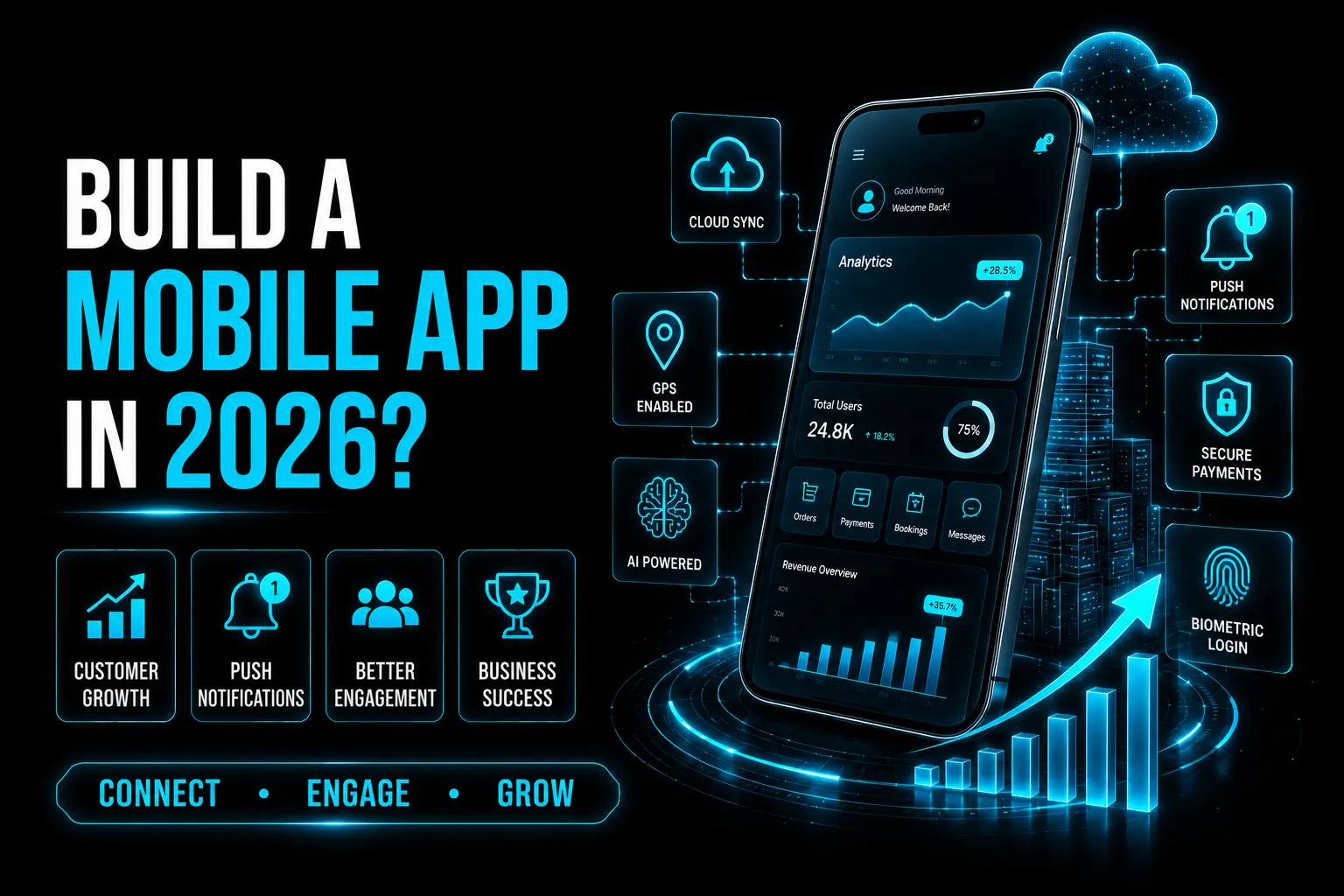
Build a mobile app in 2026 if your business depends on repeat customer engagement, personalized experiences, and mobile-specific features that drive growth.If your audience interacts infrequently, start with a high-quality website and invest in an app only when it delivers clear business value.
Introduction
In 2026, mobile app development is no longer a nice-to-have feature—it's part of modern business strategy. Smartphone users now spend nearly 5 hours daily on their devices, booking services, making purchases, and building brand loyalty entirely through apps. The modern user expects convenience, speed, and a tailored experience, which a mobile app for business naturally excels at. However, the decision to build must be based on understanding how your audience behaves and how your business delivers value.
1. When Your Business Absolutely Needs an App
Here are scenarios where an app shifts from optional to necessary:
| Indicator | Why It Matters |
|---|---|
| Customers interact daily or multiple times per week | Fast access and frictionless experience drive retention |
| You need device features (GPS, camera, push notifications, biometrics) | Websites cannot access these hardware capabilities |
| Your business model relies on repeated usage | Fitness, food delivery, loyalty retail, learning platforms |
| You want offline functionality | Users access content without internet connectivity |
| Competition has successful apps drawing customers | No app means you look behind competitors |
| You have a loyal customer base seeking convenience | Customers willing to download and engage |
| You want to expand into new digital revenue channels | Apps create new monetization opportunities |
Quick test: If your customer interacts with your business more than once a week, an app is absolutely worth it and will generate more revenue than it cost to build.
2. Key Benefits: Retention, Efficiency, and Revenue Growth
A well-built mobile app delivers measurable business value across three critical areas:
| Benefit | Impact |
|---|---|
| Customer Retention | Apps stay on home screens, increasing lifetime value for repeat customers |
| Operational Efficiency | Automates booking, support, payments, onboarding—reducing manual processes |
| Sales & Revenue Growth | 3x faster conversion than desktop; frictionless one-tap experience beats slow mobile websites |
Additional advantages include: • Enhanced performance: Faster load times and smoother UX for complex interactions • Personalized experience: Advanced customization based on user preferences and behavior • Loyalty programs: Seamless rewards tracking and redemption • Direct communication: Push notifications remind customers of deals, updates, or new services • Data insights: Every app interaction generates insights into what users click, where they drop off, what drives purchases
3. When to Wait: Build a Website First
Not every business needs an app in 2026. 90% of businesses that ask for mobile apps don't actually need one. You likely DON'T need an app yet if: • Customer interaction happens less than once a week. • You want an app just to "look professional" without real use case. • You lack resources for marketing and user acquisition. • You can't provide genuine added value over your mobile website. Better approach: Invest in a solid website, SEO, and advertising first. Save the app for later when your business grows enough to justify it. A well-built web system does 80% of the same things at 20% of the cost.
Conclusion
Should your brand build an app in 2026? The answer depends on your goals, your customers, and the type of value you want to deliver. If your brand thrives on repeat engagement, personalized experiences, faster access, and a more direct connection with users, then building a mobile app makes strategic sense
Mobile app development is a core business investment in 2026, not a short-term expense. It can increase customer retention, create new revenue channels, reduce operational strain, and strengthen your brand when treated seriously. However, if your customers interact infrequently or you lack the resources for ongoing maintenance and user acquisition, focus on building a high-quality mobile website first.
The cost of building is now lower than the cost of waiting—retain just 10 extra customers monthly at $500 lifetime value, and that's $60,000 a year from one app. Plan carefully, choose the right team, focus on user value, and only build when your business genuinely needs mobile functionality.